How Long Does a Roof Last in Florida?
15 July, 2026

At Sidd Roofing Inc, we are a family-owned and operated business. We specialize in all types of roofing services, including repairs, installations, and maintenance for residential and commercial properties.Our team is comprised of skilled professionals who are dedicated to providing top-quality workmanship and excellent customer service. We use only the best materials and stay current with industry standards to ensure that your roof is not only beautiful but also durable and long-lasting. Our owner's commitment to excellence is evident in every project we undertake. We take pride in our attention to detail and strive to exceed our customers' expectations on every job. We are fully licensed, insured, and bonded for your peace of mind.
Faq
Need help? Make a Call
2706 Stallone Dr Ste 2, Tampa, FL 33605
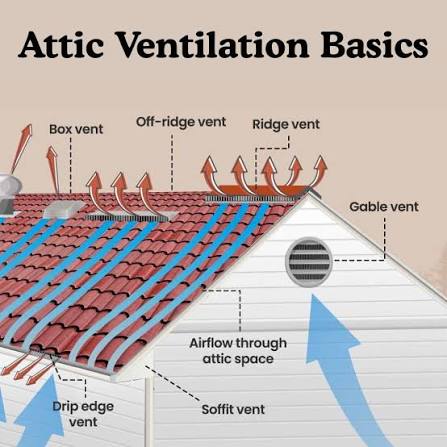
If you’ve ever climbed into your attic on a July afternoon in Tampa, you already know how hot it gets up there. What you might not know is that poor attic ventilation can quietly shorten your roof’s lifespan, drive up your cooling costs, and trap the kind of moisture that leads to mold and wood rot. Ventilation rarely gets the attention it deserves — homeowners focus on shingles, flashing, and underlayment, and airflow gets treated as an afterthought. In Florida’s climate, that’s a mistake worth avoiding. Here’s what attic ventilation actually does, how to tell if yours isn’t working, and why it matters more here than almost anywhere else.
A properly ventilated attic constantly exchanges hot, humid air for cooler outside air. Intake vents, usually tucked along the soffits or eaves, pull fresh air in. Exhaust vents, located near or at the ridge, let hot air escape. Together, they create continuous airflow that keeps attic temperatures closer to the outdoor temperature instead of climbing 40 to 50 degrees higher, which is common in a poorly vented Florida attic during summer. Good airflow does more than keep the space cooler — it also carries moisture out before it can condense on the underside of the roof deck, the framing, and the insulation.
A ventilation problem rarely announces itself directly. More often, it shows up as one of these:
Ventilation only works when intake and exhaust are balanced. A roof with plenty of ridge vents but blocked or undersized soffit vents won’t move much air, since exhaust vents need somewhere to pull air from. The reverse is just as common. Blown-in insulation that’s crept over the soffit vents is one of the most frequent culprits we find in Tampa Bay attics, and it’s usually a simple fix once it’s identified. As a general rule, building codes call for roughly 1 square foot of ventilation, split between intake and exhaust, for every 150 square feet of attic floor space — though the right ratio depends on your specific roof design and whether a vapor barrier is installed.
Asphalt shingles are manufactured and warrantied assuming reasonably normal attic temperatures. When an attic regularly bakes well above the outdoor temperature, shingles age faster from underneath, adhesive seals can soften prematurely, and roof decking can start to delaminate from repeated heat and moisture cycling. Ventilation is one of the few factors in a roof’s lifespan that’s fully within a homeowner’s control, and it’s something our team checks as part of every roof inspection — vents can look fine from the ground and still be blocked, undersized, or damaged underneath.
The fix is often simpler and less expensive than homeowners expect — sometimes it’s as straightforward as clearing blocked soffit vents or adding ridge venting where there isn’t enough. The harder part is diagnosing the problem correctly, since poor ventilation can mimic other issues from the outside. If it’s been a while since anyone has actually been up in your attic and on your roof, it’s worth having both looked at together. Contact Sidd Roofing and we’ll take a look at your attic and roof system as one connected problem, not two separate ones.
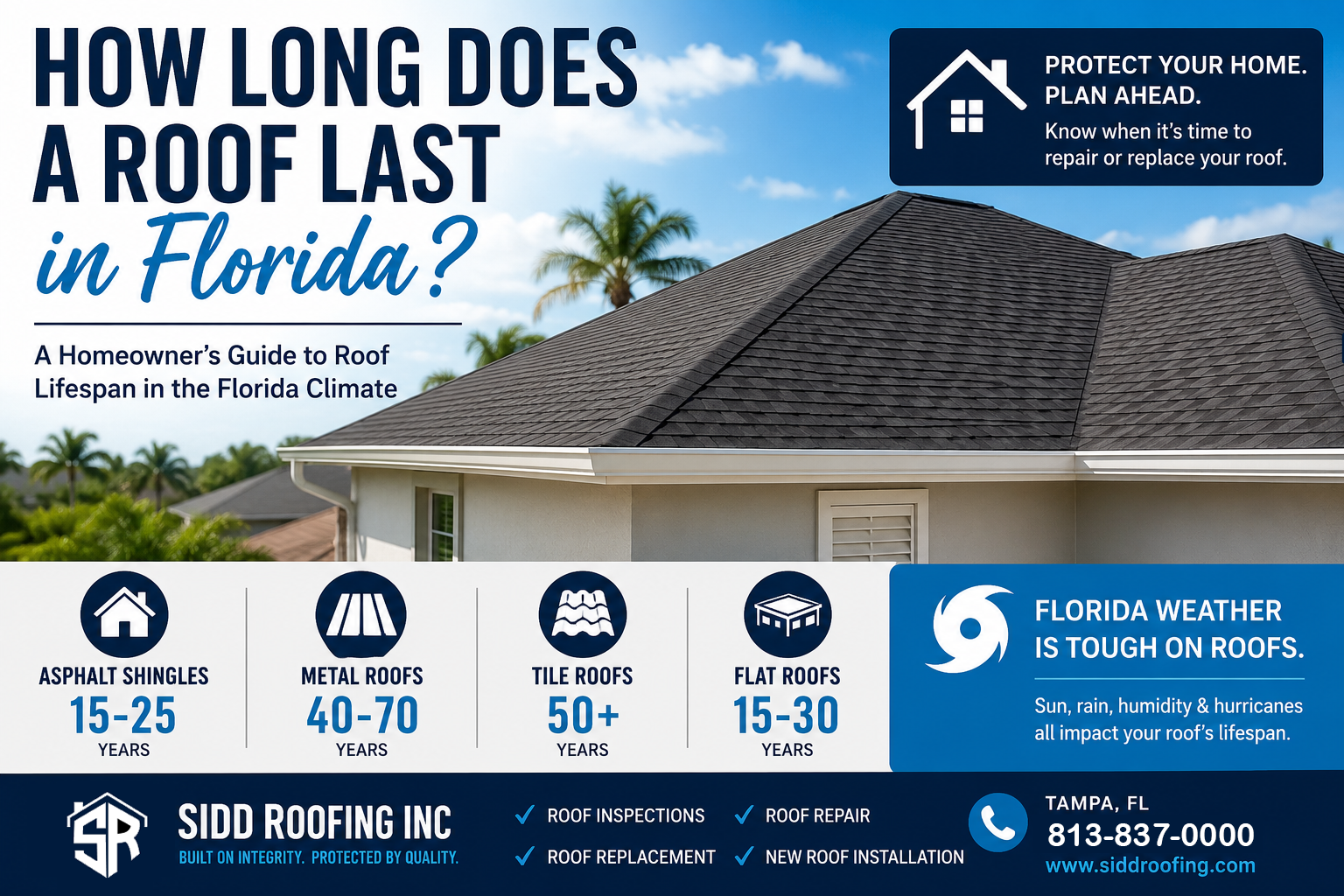
Florida roofs already have a shorter life expectancy than roofs in cooler, drier climates thanks to intense sun, humidity, and hurricane season. Ventilation won’t change the weather, but it’s one of the most overlooked ways to get the most life out of the roof you already have.